











Ambien (zolpidem) is a sedative-hypnotic prescribed for short-term insomnia. Women clear zolpidem from the body more slowly than men, which raises blood levels and next-day impairment risk at the same dose. In 2013, the FDA cut the recommended starting dose for women in half [1].
This article covers typical side effects, the pharmacological reasons for the sex difference, pregnancy and breastfeeding considerations, and how to tell expected side effects apart from misuse or dependence.
What Is Ambien (Zolpidem)?
Zolpidem is a non-benzodiazepine sedative-hypnotic, commonly known by the brand name Ambien, approved for the short-term treatment of insomnia. It works by binding to GABA-A receptors in the brain, the same general system benzodiazepines act on, to slow brain activity and induce sleep [2].
It is available in immediate-release form (Ambien, Edluar, Zolpimist) and extended-release form (Ambien CR). It is a Schedule IV controlled substance in the United States, meaning it has an accepted medical use but also carries a recognized potential for abuse.
Common Side Effects of Ambien
Common side effects reported include daytime drowsiness, dizziness, headache, nausea, and vomiting, with amnesia and falls also reported in some clinical trial populations [2].
Other frequently reported side effects of Ambien include:
- Grogginess or lingering sedation the next morning
- Impaired coordination and balance
- Memory lapses, particularly for events after taking the dose
- Vivid or unusual dreams
- Gastrointestinal upset
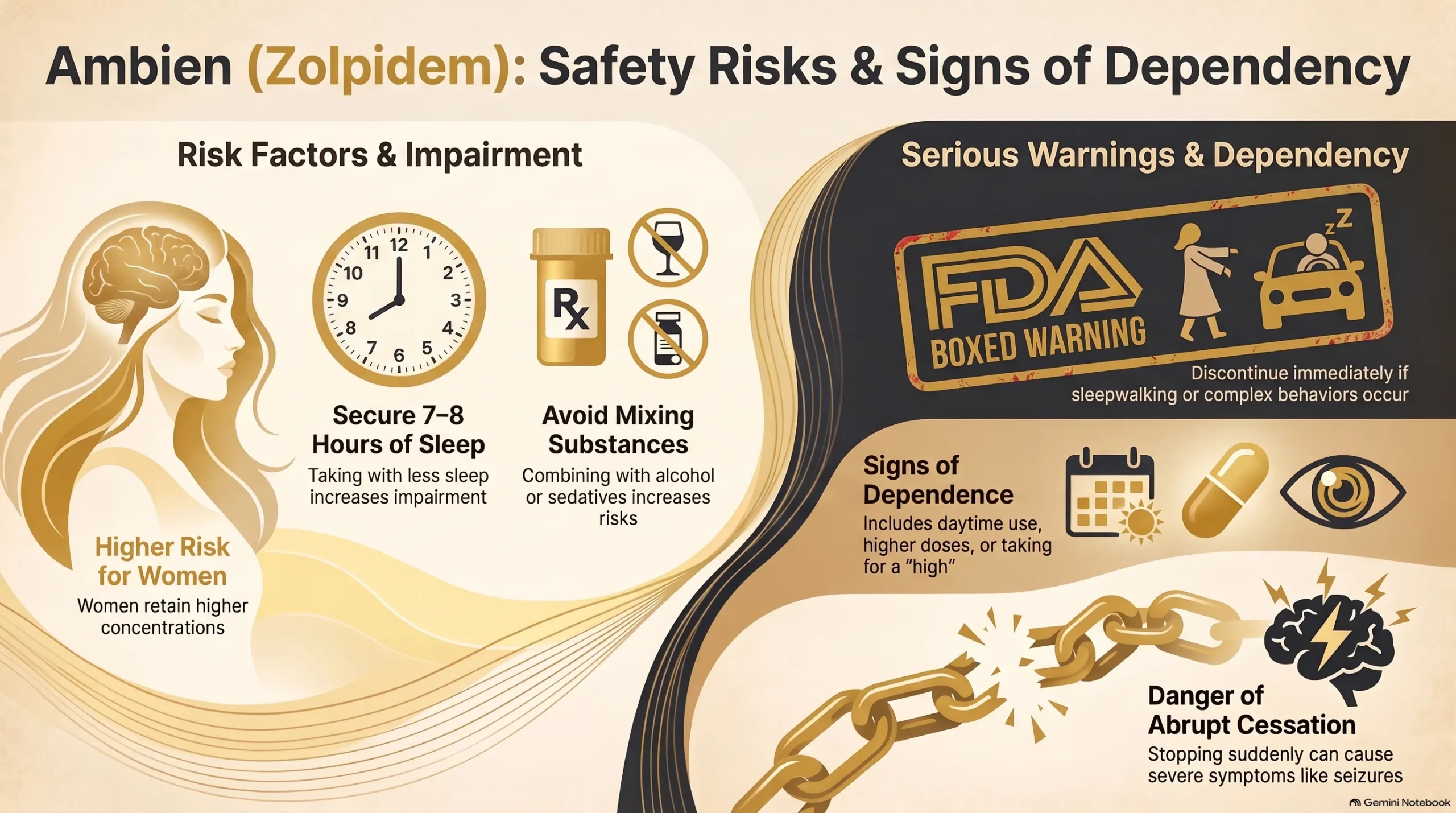
Most of these effects are dose-related and tend to be more common in people who take zolpidem at higher doses, combine it with other central nervous system depressants, or do not get a full 7 to 8 hours of sleep after dosing.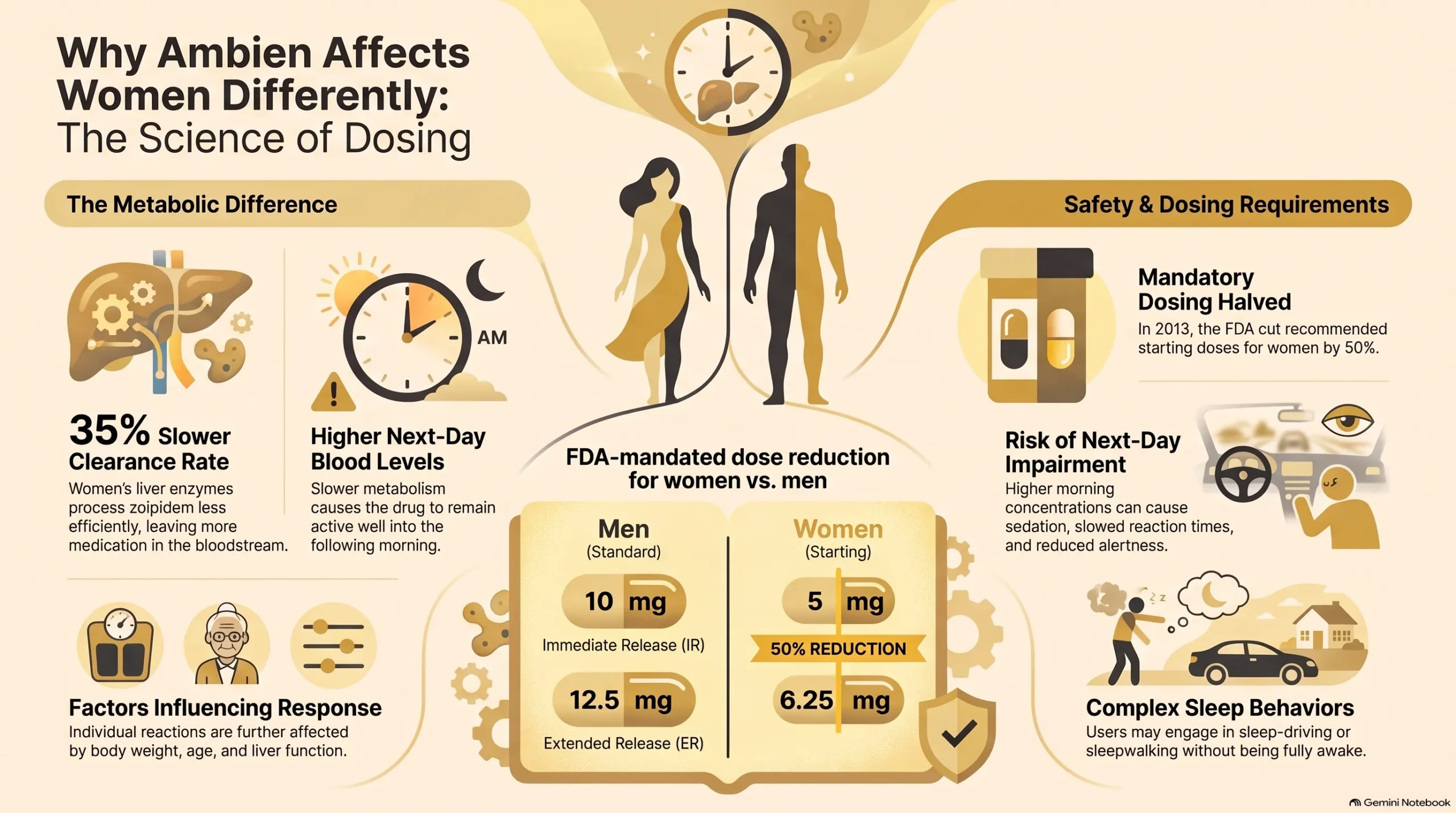
How Does Ambien Affect Women Differently Than Men?
Women metabolize zolpidem more slowly than men, which leads to higher blood concentrations of the drug for a longer period after the same dose. According to FDA prescribing data, women had roughly 35% lower clearance of zolpidem than men at the same dose in pharmacokinetic studies [3].
This is largely a clearance issue rather than an absorption issue. The liver enzymes that break down zolpidem process it less efficiently in women, which extends the drug’s presence in the bloodstream well into the following morning.
Because of this pharmacokinetic difference, the FDA required manufacturers in January 2013 to lower the recommended starting dose of zolpidem for women, cutting immediate-release doses from 10 mg to 5 mg and extended-release doses from 12.5 mg to 6.25 mg [1]. This made zolpidem the first medication with a sex-specific dosing recommendation on its FDA label.
The dosing change reflects a measurable difference in average drug clearance between sexes, not a claim that all women respond identically to the medication. Individual response still varies widely among both men and women, influenced by:
- Body weight
- Liver function
- Age
- Use of other medications
- Underlying medical conditions
What Is Next-Day Impairment with Ambien, and Who Is at Risk?
Next-day impairment refers to sedation, slowed reaction time, or reduced alertness that persists after a person believes the drug has worn off. Because women retain higher blood concentrations of zolpidem into the morning hours, some laboratory studies have found greater functional impairment in women than in men at the same dose. However, on-the-road driving studies have not found a clear difference in next-day driving performance between men and women at recommended doses [3].
Risk factors that increase the likelihood of next-day impairment include:
- Taking extended-release formulas
- Getting less than a full 7 to 8 hours of sleep after dosing
- Combining zolpidem with alcohol, opioids, or other sedatives
- Taking a higher dose than prescribed
Can Ambien Cause Complex Sleep Problems?
Yes. In April 2019, the FDA added a boxed warning to zolpidem and related sleep medications after receiving reports of complex sleep behaviors. These behaviors include sleepwalking, sleep-driving, and other activities performed while not fully awake, some resulting in serious injury or death [4].
These events have occurred after a single dose, at the lowest recommended dose, and in patients with no prior history of sleepwalking. The FDA now advises that anyone who experiences a complex sleep behavior on zolpidem discontinue the medication and contact their prescriber immediately. Clinicians avoid prescribing it to patients with prior episodes.
Is Ambien Safe During Pregnancy and Breastfeeding?
Zolpidem crosses the placenta, and use late in pregnancy has been associated with case reports of respiratory depression and feeding difficulty in newborns. However, larger cohort studies have not found a clear increase in major birth defects [5].
Zolpidem does pass into breast milk in small amounts, and infants exposed through breastfeeding should be monitored for excess sedation, poor feeding, or low muscle tone.
Pregnant and breastfeeding women should discuss insomnia treatment options directly with a prescribing clinician, who can weigh the specific risks and benefits.
Can You Become Dependent on or Addicted to Ambien?
Zolpidem was originally marketed as a lower-risk alternative to benzodiazepines, but users report dependence, tolerance, and withdrawal syndromes, particularly in people who take doses well above the recommended amount or who have a prior history of substance use [6].
Signs that zolpidem use has moved from prescribed treatment into dependence include:
- Taking the medication during the day, not just at bedtime
- Needing progressively higher doses for the same sedative effect
- Withdrawal symptoms such as rebound insomnia, anxiety, tremor, or, in severe cases, seizures when the drug is stopped abruptly
- Taking zolpidem to achieve a euphoric or high feeling rather than sleep
- Using zolpidem to come down from stimulants or to self-medicate after other substance use
Some women arrive at treatment because a legitimate prescription escalated over time, while others have used zolpidem alongside stimulants or alcohol as part of a wider pattern of substance use.
What Should You Do if Ambien Is Not Working as Prescribed?
Never adjust a zolpidem dose, increase frequency, or stop taking it abruptly without medical guidance.
Zolpidem carries a real risk of withdrawal, including seizures in severe cases. Any change in how the medication is working, whether it feels less effective or is causing more side effects than expected, should be brought to the prescribing clinician—not managed at home on your own.
Getting Help for Ambien Dependence: Addiction Treatment for Women in Michigan
It could have started as a prescription that gradually increased or as part of managing sleep after using other substances. In any case, if zolpidem use has become difficult to control, that pattern is treatable.
Rushton Recovery’s residential detox and women’s treatment program offers medically supervised detox and gender-specific residential care focusing on sedative-hypnotic dependence in women, including the co-occurring anxiety, trauma, or polysubstance use that often accompanies it.
Reach out to learn what a safe, supervised path off zolpidem can look like.
 Sources
[1] U.S. Food and Drug Administration. (n.d.). Questions and answers: Risk of next-morning impairment after use of insomnia drugs; FDA requires lower recommended doses for certain drugs containing zolpidem (Ambien, Ambien CR, Edluar, Zolpimist).
[2] MedlinePlus. (n.d.). Zolpidem. National Library of Medicine, National Institutes of Health.
[3] Greenblatt, D. J., Harmatz, J. S., & Roth, T. (2019). Zolpidem and Gender: Are Women Really At Risk?. Journal of clinical psychopharmacology, 39(3), 189–199.
[4] U.S. Food and Drug Administration. (2019, April 30). Certain prescription insomnia medicines: New boxed warning – Due to risk of serious injuries caused by sleepwalking, sleep driving and engaging in other activities while not fully awake. [MedWatch safety alert].
[5] Howley, M. M., Werler, M. M., Fisher, S. C., Tracy, M., Van Zutphen, A. R., Papadopoulos, E. A., Hansen, C., Ailes, E. C., Reefhuis, J., Wood, M. E., Browne, M. L., & National Birth Defects Prevention Study (2024). Maternal exposure to zolpidem and risk of specific birth defects. Journal of Sleep Research, 33(1), e13958.
[6] Schifano, F., Chiappini, S., Corkery, J. M., & Guirguis, A. (2019). An Insight into Z-Drug Abuse and Dependence: An Examination of Reports to the European Medicines Agency Database of Suspected Adverse Drug Reactions. The international journal of neuropsychopharmacology, 22(4), 270–277.