












If you visit your local vitamin stores or vape shop, you may have seen kratom. This is a supplement sold as an energy booster, pain reliever, and mood enhancer, as well as a remedy for intense symptoms caused by opioid withdrawal.
While many think kratom is safe because it is natural, legal, and sold over the counter, it actually carries a risk of abuse and dependence. Over 10 million Americans report currently taking or having taken this controversial herbal supplement, with many reporting using it to self-medicate for sleep, anxiety, and muscle relaxation [1].
Kratom withdrawal mirrors opioid withdrawal due to its effects on mu-opioid receptors, but tends to be milder, shorter-lived, and less life-threatening.
Understanding The Rise of Kratom
Kratom is an herbal supplement sold over the counter in vape shops, drug stores, and gas stations throughout the US and has skyrocketed in popularity this year. It’s known for its stimulating, euphoric, and pain-relieving effects, with some using it as an alternative to prescription stimulants or opioids.
Individuals have reported health benefits in small, controlled doses; however, there is no current clinical evidence to support this, and kratom is not FDA-approved. Research is growing around its long-term use as it can lead to dependency, liver toxicity, and even overdose in some cases [2].
Common Uses of Kratom
People buy kratom over-the-counter for several reasons, including:
- Opioid Withdrawal Relief
- Anxiety
- Insomnia
- Chronic Pain/Muscle and Neck Spasms
- Low Mood
- Restlessness, Inability to focus
- Lack of Energy
Origins of Kratom
Kratom, coming from the Mitragyna speciosa plant, originates from countries in Southeast Asia, including Thailand, Indonesia, Malaysia, Myanmar, and Papua New Guinea.
Indigenous communities have used their leaves for centuries, chewing them fresh or brewing them into tea to boost energy for manual labor, relieve pain, and treat ailments like fatigue and diarrhea.
Is Kratom Legal?
Although federally legal, as of late 2025, kratom now faces full bans in several states, including Alabama, Arkansas, Indiana, Rhode Island, Vermont, Wisconsin, and Louisiana.
The possession, sale, or use of kratom in these states can lead to criminal penalties, including fines and jail time, similar to controlled substances. Another 22 states, including Washington D.C., have enacted the Kratom Consumer Protection Act (KCPA), preventing the sale of kratom to individuals under the age of 21 [3].
Laws are evolving rapidly when it comes to Kratom, and users should check with local ordinances in their cities or counties.
How Is Kratom Withdrawal Different from Other Substances?
Kratom withdrawal resembles opioid withdrawal due to its action on mu-opioid receptors but is milder, shorter in duration, and less medically dangerous than withdrawal from classic opioids like fentanyl or oxycodone.
Timeline Differences
Kratom symptoms emerge 6-12 hours after the last dose, peak at 1-3 days, then subside over 4-7 days into subacute fatigue and anxiety. Opioid withdrawal from stronger substances often begins similarly but peaks more severely around days 2-4 and can extend 7-14 days or longer, with higher risks of dehydration or cardiovascular strain.
Kratom lacks the extreme fatigue or suicidal ideation crashes found in stimulant abuse, and unlike benzodiazepines, it rarely causes life-threatening seizures.
Symptom Severity
Intense physical symptoms like nausea, muscle aches, sweating, and insomnia overlap with opioids but are less intense and usually don’t require medication assistance or medical intervention to stabilize vital signs.
Psychological effects such as cravings and irritability are present, but often resolve faster than with opioid or benzodiazepine use.
Treatment Implications
Withdrawal from long-term opioid use often requires medications such as buprenorphine to reduce cravings and stabilize acute physical withdrawal symptoms.
Kratom usually responds to supportive care such as hydration or rest, tapering, and strategies to support stress.
What to Expect During Kratom Withdrawal
Withdrawing from kratom can cause several distressing and uncomfortable physical effects similar to opioid withdrawal, but not as intense or life-threatening. Symptoms of kratom withdrawal can manifest physically, emotionally, and behaviorally.
Physical Symptoms
- Nausea, vomiting
- Dizziness
- Constipation, frequent urination
- Runny nose, watery eyes
- Fever, sweating, chills, muscleache
- Change in sleep, fatigue, loss of appetite
Emotional Symptoms
- Mood swings
- Irritability
- Anxiety
- Depression
Behavioral Symptoms
- Trouble focusing
- Restlessness
- Aggression or emotional outbursts
- Apathy, emotional numbness
- Intense craving
How Long Does Kratom Withdrawal Last?
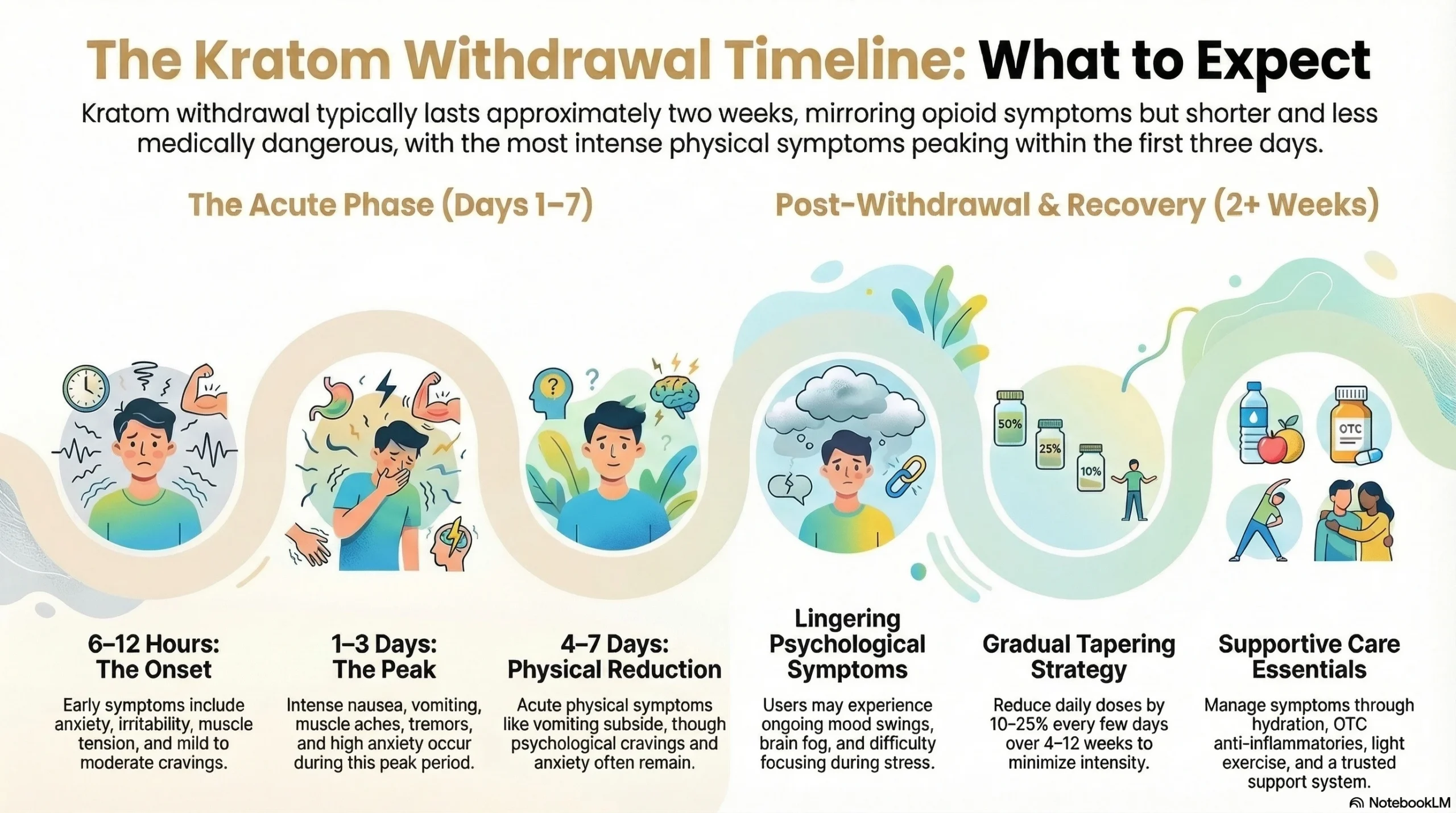
Kratom withdrawal typically lasts about two weeks, but the most intense symptoms usually peak within 1 to 3 days. The timeline is usually separated into four stages:
- 6-12 Hours After Last Dose: Symptoms include anxiety, irritability, muscle tension, and mild to moderate cravings.
- 1-3 Days: Symptoms usually peak during this stage and may include vomiting, intense nausea, muscle aches and shakes, and intense cravings or high anxiety.
- 4-7 Days After Last Dose: Physical symptoms such as vomiting and muscle pain reduce, and psychological symptoms such as cravings and anxiety are often still present.
- 2+ Weeks (Post Withdrawal): Symptoms such as mood swings, cravings under stress, brain fog, or trouble focusing may linger.
Tips for Detoxing from Kratom On Your Own
It is possible to detox from kratom on your own for those who have mild dependence or have not been using the herbal supplement for a long time. However, symptoms can still arise, such as vomiting and fatigue. While they don’t require immediate medical care, they can lead to complications, such as dehydration, if you don’t take the proper care steps.
- Taper gradually rather than quitting all use cold turkey. Reduce your daily dose by 10-25% every few days over a 4 to 12 week period to minimize withdrawal intensity.
- Stay hydrated. Drink water, Gatorade, and teas that are gentle on your stomach, such as Mint or Chamomile.
- Use OTC anti-inflammatories such as Ibuprofen or Tylenol to reduce symptoms like muscle pain or headaches.
- Build a support system or trusted friend to reach out to, journal symptoms, and consult a doctor or treatment facility if symptoms persist beyond 7 days.
- Make sure to get light, daily exercise and participate in activities that bring you joy and reduce stress, such as playing with a pet, watching Netflix, or going out to eat with friends. Supervised Kratom Detox in South Lyon, MI
Supervised Kratom Detox in South Lyon, MI
Rushton Recovery understands how challenging recovering from substance abuse is and that it requires a comprehensive approach to care. Our supervised medical detox and holistic residential treatment center in Michigan offers a healing space to embark on your journey toward a kratom-free life.
We offer evidence-based therapies designed to evolve with your individual needs and address the root of your kratom abuse. Let our team help you heal, repair relationships, and equip you with the skills to achieve long-term recovery.
Reach out to our Admissions team now.
Sources
[1] Palamar, J. et al. (2021). Past-Year Kratom Use in the U.S.: Estimates From a Nationally Representative Sample. American journal of preventive medicine, 61(2), 240–245.
[2] National Institute of Drug Abuse. 2022. Kratom.
[3] LEGISLATIVE ANALYSIS AND PUBLIC POLICY ASSOCIATION. 2025. KRATOM: SUMMARY OF STATE LAWS.